
Lady @Lady@cat.family

- Codeberg
- https://codeberg.org/Lady
- Header
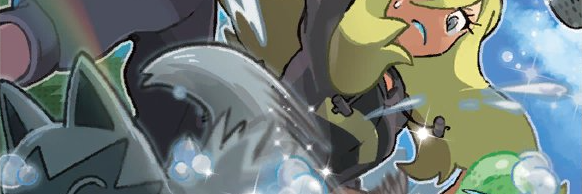
- Delinquent (BREAKpoint 98a) by Megumi Mizutani
Owner
Administrator / Public Relations for GlitchCat. Not actually glitchy, nor a cat. I wrote the rules for this instance.
“Constitutionally incapable of not going hard” — @aescling
“Fedi Cassandra” – @Satsuma
I HAVE EXPERIENCE IN THINGS. YOU CAN JUST @ ME.
I work for a library but I post about Zelda fanfiction.
Joined Sep 2021
so i use U+00A6 ¦ BROKEN BAR. this character has a number of desirable properties:
• the top half of it looks like a straight apostrophe
• it is narrow and fairly unobtrusive
• its visual effect of dividing a word into two components, but doing so incompletely, reflects the apostrophes role of indicating omission or contraction
• it is a character with virtually universal support in fonts and computer systems despite having no existing practical usage
so those who follow me here probably have noticed that i use U+00A6 ¦ BROKEN BAR as my apostrophe character.
it is probably not surprising that this ultimately derives from a beef with Unicode. the Unicode Standard believes that the correct character for the apostrophe is U+2019 ’ RIGHT QUOTATION MARK. this is problematic because that is obviously the character that we use in English to close single‐quoted text. an apostrophe has a different function than closing a quote, so it stands to reason that it should have a different character. you could argue that this is a flaw in the English typesetting tradition and not in Unicode, but the point remains.
i am not alone in thinking this. many Internet publications which otherwise use curly quotes still use U+0027 ' APOSTROPHE as their apostrophe character, distinguishing it from the close‐quote character in text. Unicode however does not recommend using U+0027 ' APOSTROPHE if you can possibly avoid it.

@Satsuma @wallhackio @coriander i bet their spotify is 100% video game soundtracks
@Satsuma @wallhackio @coriander yeah hiphop sampling would have been a better example but this person clearly does not listen to good music
@wallhackio @coriander they think that interacting with an AI regurgitation of all of the culture it copyright infringement stole is the same kind of participation with the cultural milieu as singing along to your favourite song
@coriander i understand what they are trying to say but it is bad
i was annoyed a few days ago so i started writing a blogpost
@aescling @wallhackio case statements use § 2.14 Pattern Matching Notation which is absurd and far inferior to grep for any but the most basic usecase
@wallhackio i am just making fun of the posix shell but i am also making fun of you for tolerating it (and not just doing an if…elif…fi chain which does not require you to type esac)
@aescling @wallhackio (did you know that a file with the name `Icon´ followed by a carriage return is how macOS has stored folder icons since forever? 🌠)
@aescling @wallhackio you are the operator of your computer, not POSIX
@aescling @wallhackio files cannot have newlines in them that is absurd
they can have spaces in them however,,
@aescling @wallhackio *find. find is for that.
file is just for getting the type of the file
@aescling @wallhackio file is for a recursive directory search but there is no reason why you can¦t call file in a makefile
@wallhackio if you are doing `${file%flac}mp3"´ anyway can¦t you just switch on file extension rather than making a call to `file´?
if it were me i would parallelize this by using GNU Make which has a parallelization option
probably, to get all the functionality you want, creating some default rules to generate a %.mp3 from a %.flac and a fallback match-anything rule that treats its target as a directory (using FORCE) with secondary expansion to set the child files as dependencies from the target name dynamically (i think that works…)
but i¦m sure there is a more sane way
@wallhackio this motherfucker typed esac
me when i am 70: yes so way back in the olden days the pokémon company released this one minute youtube short that featured wooper and clodsire
youth: ?????
me: i know none of these words mean anything to you but anyway i have it stuck in my head
- Codeberg
- https://codeberg.org/Lady
- Header
- Delinquent (BREAKpoint 98a) by Megumi Mizutani
Owner
Administrator / Public Relations for GlitchCat. Not actually glitchy, nor a cat. I wrote the rules for this instance.
“Constitutionally incapable of not going hard” — @aescling
“Fedi Cassandra” – @Satsuma
I HAVE EXPERIENCE IN THINGS. YOU CAN JUST @ ME.
I work for a library but I post about Zelda fanfiction.
Joined Sep 2021