
æʃliŋ, loaf of autismo @aescling@cat.family
- website
- https://æscling.cat.family
- neopronouns
- æ / ær / æi / æin / æinselves
- https://misskey-hub.net/ns#isCat
- true
- pawprint
- openpgp4fpr:104798A74A3F3CEA9B29B369B34C7264BB895704
- header
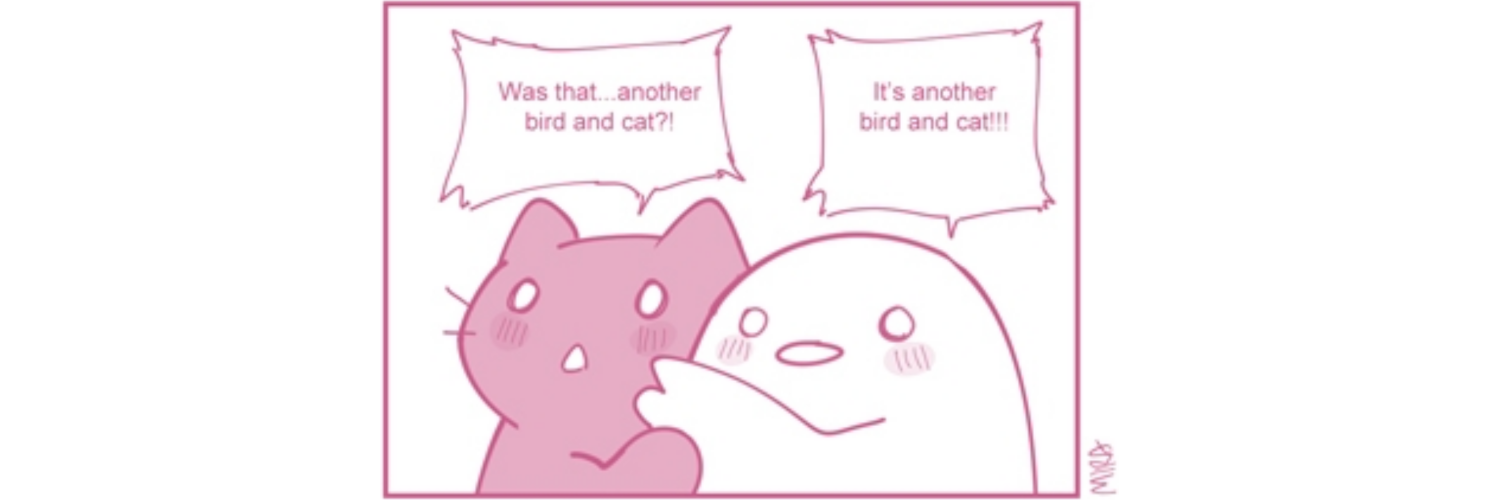
- miss bird and miss cat, by mira ongchua
Owner
it’s pronounced “ashling”. canonically a black housecat or any of the grass cat pokémon, but currently experiencing daily TFs. Commewnist. it/she and more. i automatically change my pfp on the furst post of the day
GlitchCat syscatmin and meowstodev; @ me about techincal problems with the instance, or fur feature requests. i got a job due to some extent to my work on this instance
i have very strong opinions about the sonic furanchise. pokémon has me in a chokehold when it comes to merchandise
available via email with the same username and domain. DM/email for other purrotocols
workplace policy is to clarify that all of my opinions expressed here are my own, and not those of my employer
“all this shit is still incomprehensible but im glad u accomplished something” ―@wallhackio
Joined Sep 2021
@onfy @vaporeon_ oh i just meant, “what the fuck”
re: you didn’t ask me , i know re: Unimportant question, doesn't matter
@vaporeon_ @onfy ah
An internal Apple music video released in 1994 during the brief period when Apple allowed other companies to clone the Mac.
- Filmed at Apple's corporate headquarters (1 Infinite Loop)
- Performed by "Dave Garr & The Licensees" (all Apple employees)
- A parody of the song "I Think We're Alone Now"
@vaporeon_ …i can’t tell if that video is real or just a joke but that instrumental is straight from Katy Perry — Last Friday Night
you didn’t ask me , i know re: Unimportant question, doesn't matter
@vaporeon_ @onfy did you read the description from the youtube video
i have terrible taste in rap beats lol
@The_T @wallhackio it’s okay, people always talk about diabetics as if they fucked up their own lives anyway because nobody acknowledges the type 1s
besides, what i understand, it is more complicated than “you fucked up your life” anyway. like sure some things increase your risk but some people just won’t develop type 2 from that behavior anyway
@The_T @wallhackio roman numeral I, fur 1
@coriander @wallhackio @Lady (anyway i thought about it a little more i’m definitely into it)
@The_T @wallhackio well shit!! i’m type I diabetic!!
æʃliŋ, loaf of autismo
boosted
when the umbreon
@The_T @wallhackio if that’s because you ate the other half that’s valid af

@vaporeon_ (i say "pure lambda calculus" but i'm using if statements and purrimitive types. you COULD actually do this in Pure Lambda Calculus but it would be a bit obnoxious)
@vaporeon_ it enables recursion-like behavior in with just lambda abstraction and application:
# (fun f n -> if n == 0 then 1 else n * f f (n - 1))
  (fun f n -> if n == 0 then 1 else n * f f (n - 1))
  6;;
- : int = 720
@vaporeon_ yeah the purroblem is that the function takes an argument that is of the same type as the function itself. if it were pawsible to (safely) type it it would be a recursive type!
@vaporeon_ potentially fun question: why did i have to use a void pointer fur the type of the furst argument to fac?
@vaporeon_ the fact that printf template strings allow quines to happen is more or less the same idea as this hack to do general recursion without explicit recursion
#include <stdio.h>

int fac(void *f, int n) {
    int (*g)(void *, int) = f;

    if (n == 0) {
        return 1;
    }
    return n * g(f, n - 1);
}

int main(void) {
    printf("6! == %d\n", fac(&fac, 6));
}
a technique that is generalizable, btw. (not that you would ever need to use the Y combinator in any purractical situation)
- website
- https://æscling.cat.family
- neopronouns
- æ / ær / æi / æin / æinselves
- https://misskey-hub.net/ns#isCat
- true
- pawprint
- openpgp4fpr:104798A74A3F3CEA9B29B369B34C7264BB895704
- header
- miss bird and miss cat, by mira ongchua
Owner
it’s pronounced “ashling”. canonically a black housecat or any of the grass cat pokémon, but currently experiencing daily TFs. Commewnist. it/she and more. i automatically change my pfp on the furst post of the day
GlitchCat syscatmin and meowstodev; @ me about techincal problems with the instance, or fur feature requests. i got a job due to some extent to my work on this instance
i have very strong opinions about the sonic furanchise. pokémon has me in a chokehold when it comes to merchandise
available via email with the same username and domain. DM/email for other purrotocols
workplace policy is to clarify that all of my opinions expressed here are my own, and not those of my employer
“all this shit is still incomprehensible but im glad u accomplished something” ―@wallhackio
Joined Sep 2021
æʃliŋ, loaf of autismo's choices: